
DAP prices squeeze margins every season. Microbial phosphorus does not erase fertiliser — it helps you get more plant-available P from soil and from every bag you still buy.
Pakistani growers feel DAP cost in the wallet before they feel it in the leaf. Wheat, potato, cotton and vegetables all push early phosphorus demand, yet alkaline soils lock a large share of applied P. Mega Farmer BIOSO™ focuses on microbial phosphorus efficiency: phosphate-solubilizing biology plus a living-soil base so roots meet more available P without blindly increasing bag rates every season.
Start with the foundation product Soil-Revive 7-in-1. Pair it with root support from Root-Force Ultra and, later, reproductive nutrition from Yield-Max Pro where flowering and tuber bulking need balanced feed. Country context: biofertilizer Pakistan.
Why DAP alone underperforms on many Pakistan soils
High pH, free calcium and low biological activity convert soluble phosphate into less available forms within days. You paid for P that the plant cannot fully use. Meanwhile organic matter is thin on over-worked blocks, so microbial life that would normally cycle nutrients is weak. Adding another bag may give a short colour response and still leave efficiency on the table.
Microbial P programs attack the bottleneck: acids and enzymes around the root, better aggregation and water contact, and a rhizosphere that keeps cycling. That is why progressive farms combine a moderated DAP basal with inoculants rather than choosing chemistry or biology as a false either-or. The soil already holds phosphorus capital in many Punjab and Sindh fields. Biology helps unlock it while your reduced bags still cover peak demand windows.
Dealers sometimes push more bags because that is the familiar conversation. A better conversation is how much of last season's DAP actually reached the crop. Leaf tests, root digs and simple strip trials answer that better than arguments in the mandi.
A practical step-down approach (not a crash diet)
- Baseline: Note current DAP rate, soil test P, and last season's crop response on each block.
- Inoculate early: Apply Soil-Revive at land prep or first irrigation (see PSB dosage per acre).
- Protect roots: Use Root-Force at establishment for vegetables, potato and orchards so uptake surface area grows.
- Trim, do not slash: Many growers first reduce DAP modestly while watching leaf P and early vigour, then refine next season.
- Verify: Compare treated and untreated blocks. Ask us for trial notes on field trials instead of trusting fixed internet percentages.
We do not publish cut-DAP-by-X-percent guarantees in this article. Field results depend on soil chemistry, irrigation and management.
Planning a DAP plus biofertilizer split for this season? Message Mega Farmer BIOSO™ from Lahore — farmers and distributors get a reply within one working day.
Where money is usually wasted
- Broadcasting DAP without moisture to move it into the root zone.
- Applying living inoculants into hot, dry dust with no follow-up irrigation.
- Tank-mixing microbes with harsh fungicides or strongly chlorinated water.
- Ignoring micronutrient lockout. Fe, Zn and Mn stress can mask P gains. Consider MicroFoliar Plus when leaf tests show multi-nutrient gaps.
- Skipping organic matter and expecting microbes to thrive in sterile sand or powdered silt without any carbon support.
Also watch labour shortcuts: half-dissolved fertiliser left in corners of the plot, or drip injectors that never get calibrated. Biology cannot fix a broken application habit by itself.
Crop-focused notes
Wheat
Basal P plus early microbial colonization supports tillering on alkaline soils common after rice. See wheat microbial inoculant guidance for Rabi timing. Keep urea splits on schedule; biology improves use of what you apply rather than deleting every bag overnight.
Potato
Potato programmes that rebuild soil biology often show stronger stands and better handling quality in Punjab observations. Read the structured plan on potato yield program and the related post potato biofertilizer program Pakistan. Ask WhatsApp for current trial notes rather than copying screenshot claims.
Vegetables and tunnel farming
Frequent fertigation makes drip injection of Soil-Revive straightforward. Keep filters clean and inject mid-set so inoculant reaches the wetted bulb. Pair with Root-Force at transplant for hybrid tomatoes and chillies that must establish quickly under plastic. Mid-season, discuss Flower-King Elite or Yield-Max when reproductive load rises.
Gulf sandy soils: different math
Desert sand holds little organic P capital. Microbial phosphorus still matters, but carbon rebuilding and frequent light inoculation matter more than copying Punjab DAP rates. See Gulf desert biofertilizer and UAE and Saudi sandy soil biofertilizer.
Simple farm worksheet before you change rates
Write down last season's DAP kg per acre, yield or carton outcome, irrigation type, and any leaf-test P notes. Share that worksheet on WhatsApp when you order Soil-Revive. Our Lahore team can suggest a cautious efficiency stack for your crop without promising miracle cuts. Distributors stocking BIOSO should train counter staff on this same stepwise story so farmers do not expect overnight zero-DAP results.
If you manage multiple blocks, change one or two first. Side-by-side learning beats changing the entire farm on a rumour. Keep photos of root systems at 30 and 45 days; they often tell the efficiency story earlier than harvest.
Order and advice from Lahore
Xelora Industries PVT LTD supplies Mega Farmer BIOSO™ from Lahore. WhatsApp https://wa.me/923214999759 or email contact@megafarmer.store with your crop, acres and current fertiliser plan. We help you design a biology-first efficiency stack, not a one-size slogan. Ordering walkthrough: buy biofertilizer online Pakistan.
Frequently asked questions
Why does DAP underperform on Pakistani soils?
High pH and free calcium lock soluble phosphate into forms roots cannot use within days, so a large share of every bag never reaches the crop.
How much can I cut DAP with biofertilizer?
We do not publish a fixed percentage. Trim modestly in season one on one or two blocks, compare with an untreated strip, and refine next season. The published wheat benchmark with a comparable consortium was a 25% reduction at equal yield.
Products mentioned in this guide
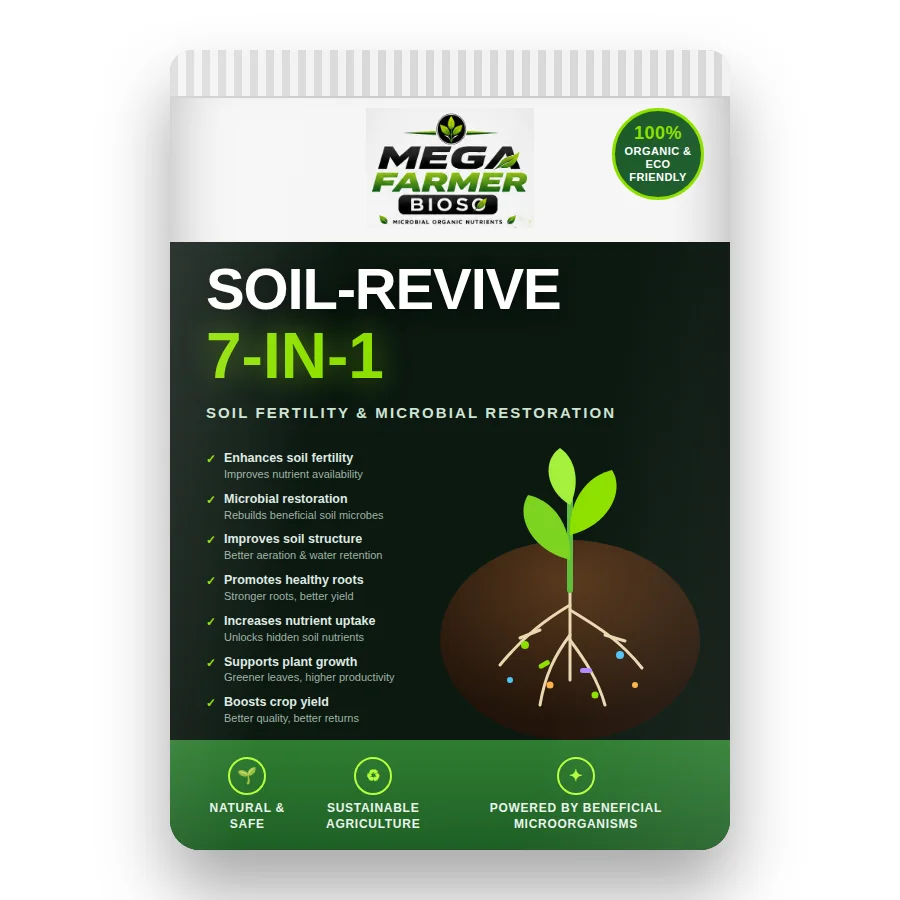
Soil-Revive 7-in-1
Soil fertility & microbial restoration
Azotobacter chroococcum · Bacillus subtilis · Bacillus megaterium · Bacillus mucilaginosus · Bacillus licheniformis
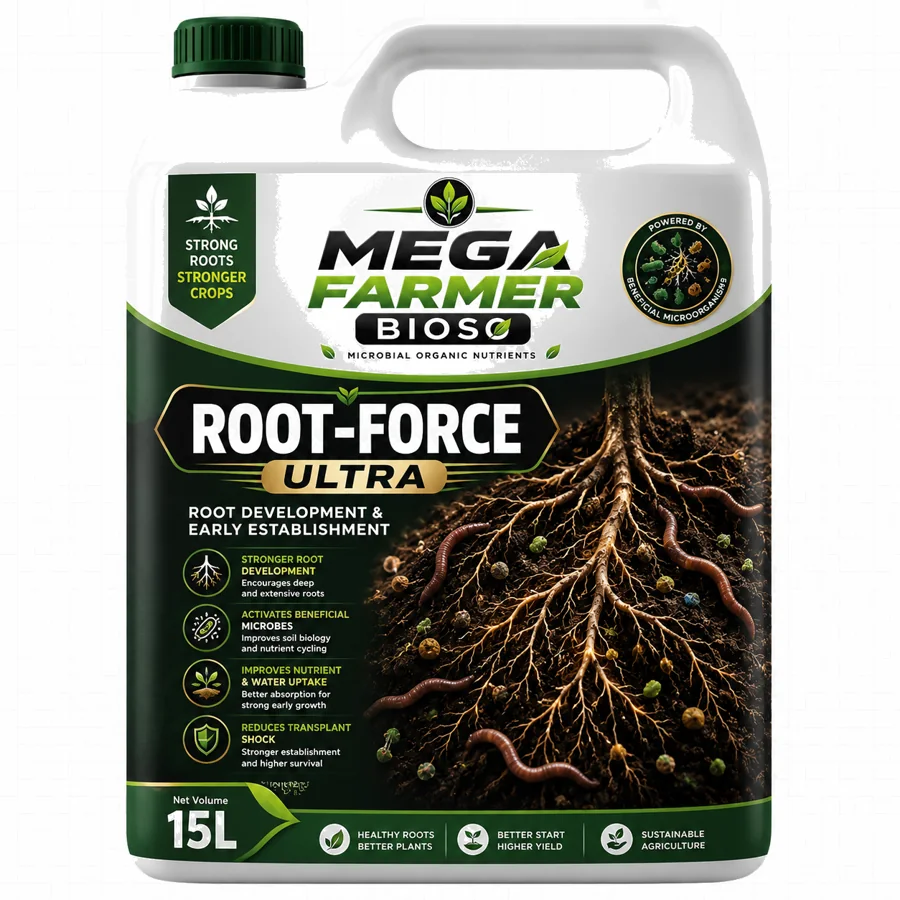
Root-Force Ultra
Root development & early establishment
Azospirillum brasilense · Bacillus subtilis · Bacillus amyloliquefaciens · Bacillus megaterium · Pseudomonas fluorescens
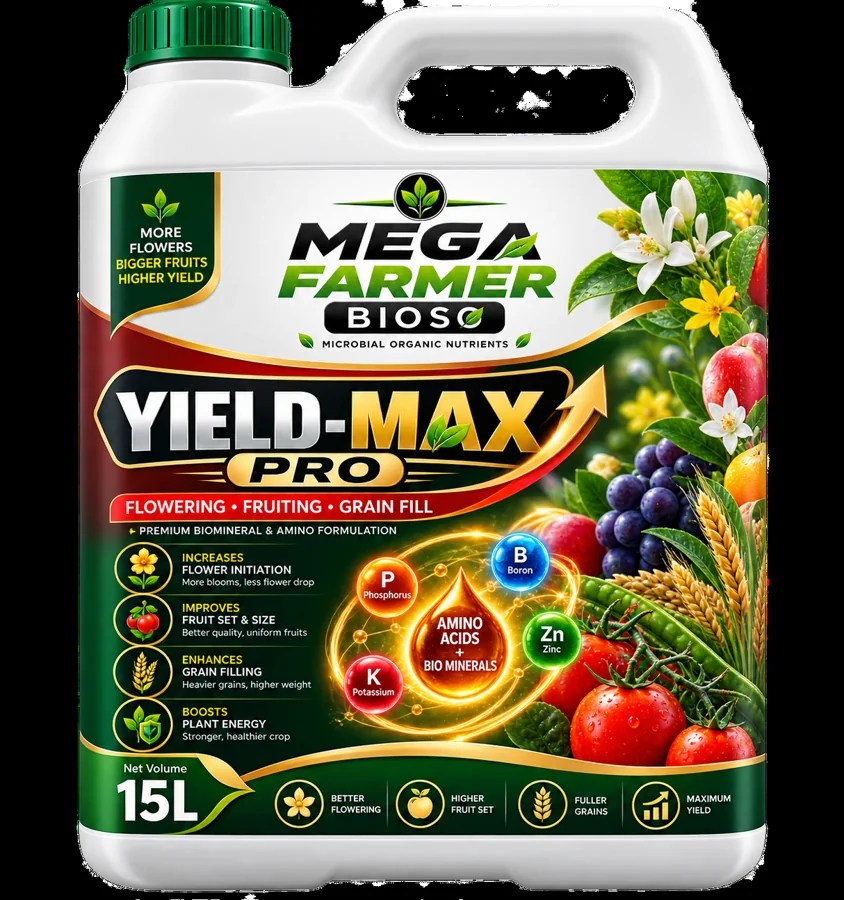
Yield-Max Pro
Flowering / fruiting / grain fill
Azotobacter chroococcum · Azospirillum brasilense · Bacillus megaterium · Bacillus mucilaginosus · Bacillus amyloliquefaciens
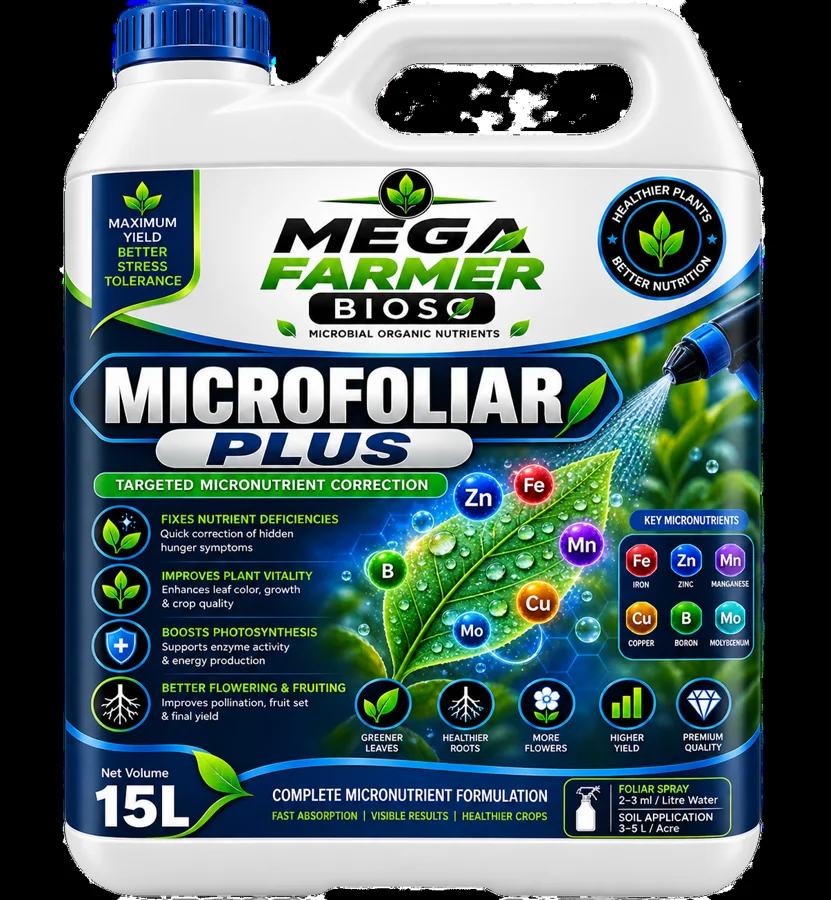
MicroFoliar Plus
Targeted micronutrient correction
Pseudomonas fluorescens
Results vary with soil, water, weather and management. Figures quoted from Mega Farmer field evaluations are single-season observations on named farms, not guarantees. Doses are label guidance — confirm with a soil test and your agronomist. Immuno-Shield is a root-colonising microbial soil conditioner used within IPM programmes; it is not a registered pesticide.