
Wheat pays for early root colonization. A microbial inoculant at sowing or first irrigation helps unlock nutrients and steady tillering on alkaline Pakistan soils.
Wheat remains the backbone crop for millions of Pakistani farmers. Yield ceilings often sit in the soil: compacted layers, locked phosphorus, thin organic matter and stressed roots after rice or cotton. A microbial inoculant for wheat in Pakistan is not a miracle spray. It is an early investment in rhizosphere life so the crop explores more soil and uses fertiliser more efficiently through tillering and into grain fill preparation.
Mega Farmer BIOSO™ recommends starting with Soil-Revive 7-in-1 as the soil foundation, then supporting canopy growth with MegaGrow-X when vegetative push is needed. Country hub: biofertilizer Pakistan.
Pakistan farming is diverse: canal commands in Punjab, tube-well blocks with rising EC, tunnel vegetables near cities, and rainfed margins where organic matter is already thin. A living-soil program has to respect that diversity. Mega Farmer BIOSO™ from Xelora Industries PVT LTD in Lahore is built as a system, not a single miracle bottle. Soil-Revive rebuilds the base. Root, vegetative, reproductive and stress products then slot into the calendar you already run with your agronomist or progressive dealer.
When to inoculate wheat
- At sowing: Soil application or seed-adjacent placement so microbes meet emerging roots.
- With first irrigation: Useful when drill timing was rushed or soil was dry at seeding.
- After stress events: Heat, waterlogging patches or harsh pesticide sequences may justify a maintenance dose. Ask for block-specific advice.
Dosage bands for Soil-Revive (3 to 5 L/kg per acre soil drench guideline) are discussed in PSB biofertilizer dosage per acre. Adjust for soil texture and moisture. On heavy rice-wheat soils, make sure beds or fields are not anaerobic sludge when you inoculate; living biology needs oxygen and moisture together, not mud soup.
What biology helps wheat do better
Phosphate solubilization, nitrogen cycling support, root growth promotion and improved soil structure all matter for tillering and grain fill preparation. Root digs after inoculation often teach more than leaf colour alone. Pair Soil-Revive with Root-Force Ultra on weak stands or re-sown patches where birds or crusting thinned the plant population.
For phosphorus fertiliser efficiency, see reduce DAP cost with microbial phosphorus. Nitrogen-focused biology is covered in nitrogen-fixing biofertilizer for Pakistan crops. Neither article invents fixed maund gains; both point to practical sequencing.
Need a wheat-block inoculant plan for this Rabi? Message Mega Farmer BIOSO™ from Lahore — farmers and distributors get a reply within one working day.
Compatibility with urea and DAP programs
Most wheat programs still use urea and DAP. Biology sits beside them, improving availability and root uptake, rather than pretending bags disappear overnight. Avoid tank-mixing living inoculants with aggressive fungicides; separate applications when unsure. Keep soil moist after drenching. If you broadcast urea on dry soil in windy heat, biology will not rescue volatilisation losses. Fix the application habit first.
Many progressive growers keep their usual split nitrogen plan while adding Soil-Revive early. They then watch tiller uniformity and leaf colour strips. That is a safer learning path than cutting fertiliser hard on the entire acreage in year one.
Micronutrients and later stages
Alkaline soils lock Zn and Fe. If leaf tests or visual symptoms show micronutrient stress, discuss MicroFoliar Plus or Nano-Micro Spray. Approaching reproductive stages, Yield-Max Pro and potassium tools such as Potash-SOP 3X Liquid support grain fill quality conversations with your agronomist. Silicon tools such as Ultra Silicon Booster may enter the chat when lodging or heat stress history is strong.
District notes without false precision
Central Punjab canal commands, barani fringes and saline patches near drains do not behave the same. Tell us your district, previous crop and irrigation source when you order. We soft-claim only. Observed cereal notes live in conversations and on field trials, not as invented blog percentages.
Evidence stance
Mega Farmer documents field work on field trials pages. This wheat article stays practical. We will not invent tiller or maund percentages here. Ask WhatsApp for the latest cereal notes relevant to your district. Potato growers reading this for rotation planning can jump to potato biofertilizer program.
Order for Rabi planning
Message WhatsApp +92-321-4999759 with district, acres and sowing window. Email contact@megafarmer.store. Ordering walkthrough: buy biofertilizer online Pakistan. Distributors serving wheat belts should also read distributor guidance.
Labour, drills and real farm constraints
Not every wheat farmer can seed-treat perfectly during a short sowing window. That is fine. Soil drench or first-irrigation inoculation still places biology where crowns and roots will feed. If custom hiring drills are rushed, plan the inoculant with the first rouni or canal turn instead of skipping biology entirely.
Mark a 1-acre strip as your learning block. Apply Soil-Revive there with full attention, then compare tillers and root digs against the neighbour strip on the same variety and fertiliser plan. Soft learning beats whole-farm gambles. Share strip photos on WhatsApp if you want a second opinion from Lahore before you scale up next Rabi.
After rice, watch for compaction. Biology helps nutrient cycling but will not replace chiseling or better residue management where hard pans dominate. Combine living soil with physical fixes when needed. For shopkeepers serving wheat belts, keep Soil-Revive and Root-Force visible before peak sowing so farmers do not default only to more DAP under time pressure.
FAQ-style notes farmers ask at the shop
Can I mix Soil-Revive with urea in the same tank? Usually better to keep living inoculants separate from concentrated fertiliser slurries unless our team confirms a specific method for your water. Can I skip DAP entirely this year? Soft answer: not the default advice. Improve efficiency first, then trim with strip evidence. Will biology work after heavy fungicide weeks? Maybe weakly. Rebuild with a maintenance drench after the harsh sequence and improve spray timing next cycle.
Frequently asked questions
When should wheat be inoculated?
At sowing or with the first irrigation, with a MegaGrow-X follow-up at tillering if tiller counts look weak.
Can I keep my urea programme?
Yes. Keep splits on schedule in season one; biology improves the use of what you apply. Reduce only after you have a treated and untreated strip to compare.
Products mentioned in this guide
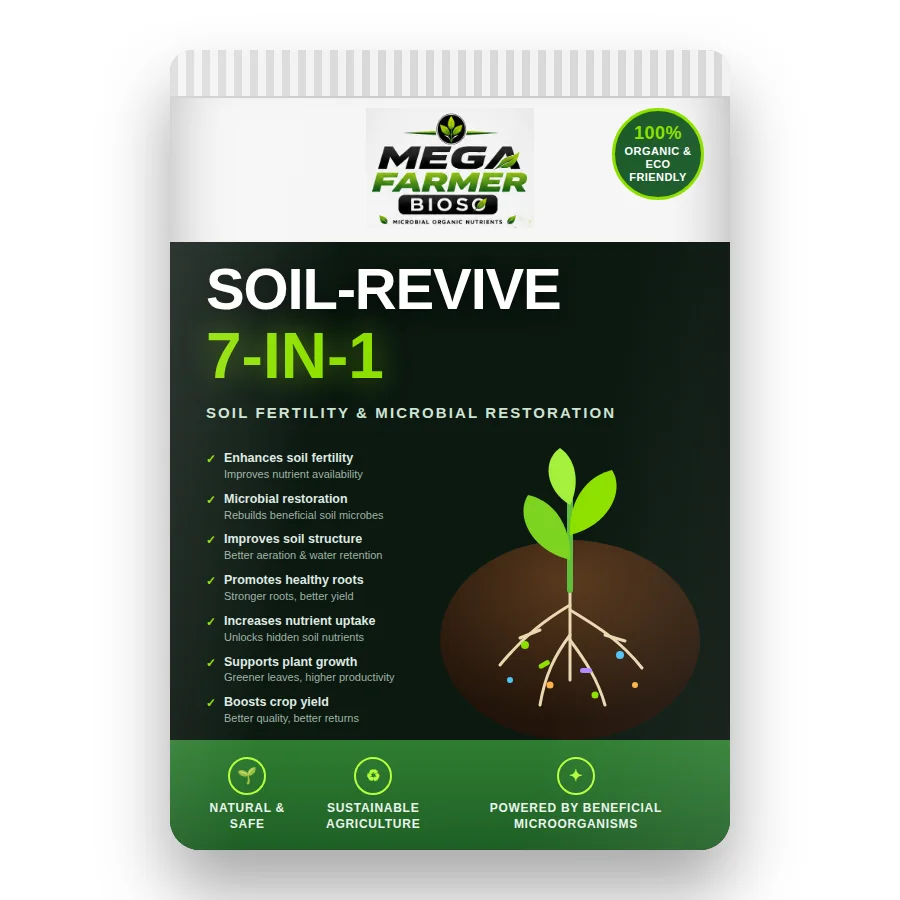
Soil-Revive 7-in-1
Soil fertility & microbial restoration
Azotobacter chroococcum · Bacillus subtilis · Bacillus megaterium · Bacillus mucilaginosus · Bacillus licheniformis
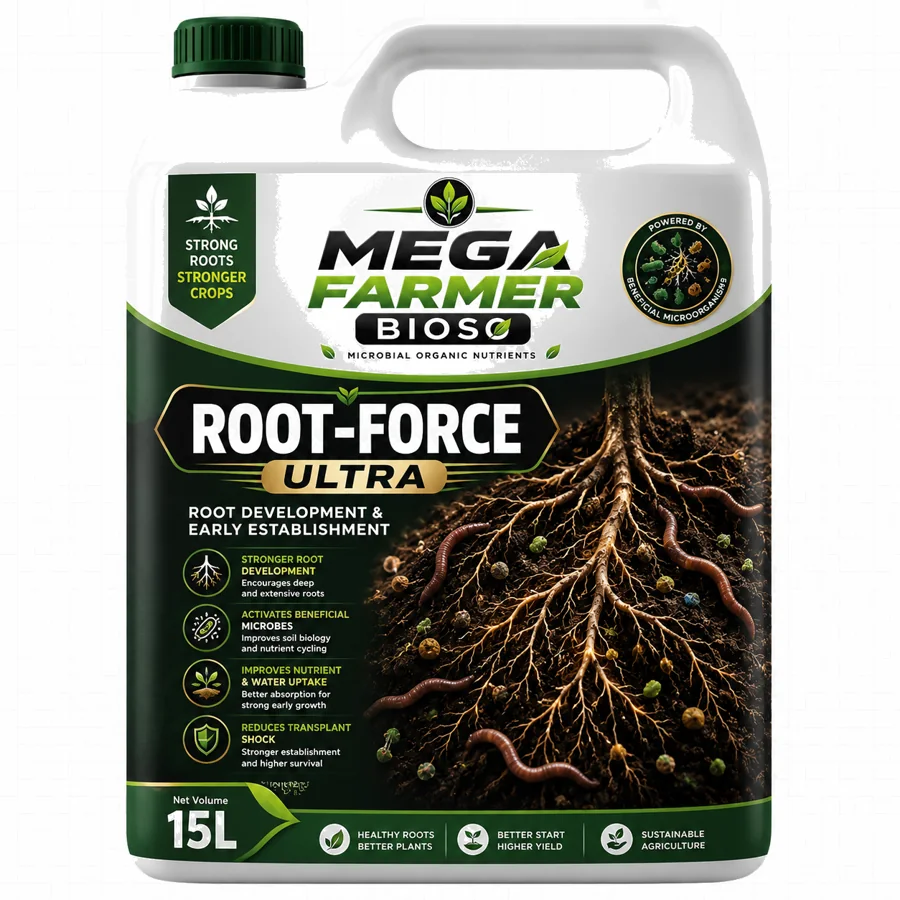
Root-Force Ultra
Root development & early establishment
Azospirillum brasilense · Bacillus subtilis · Bacillus amyloliquefaciens · Bacillus megaterium · Pseudomonas fluorescens
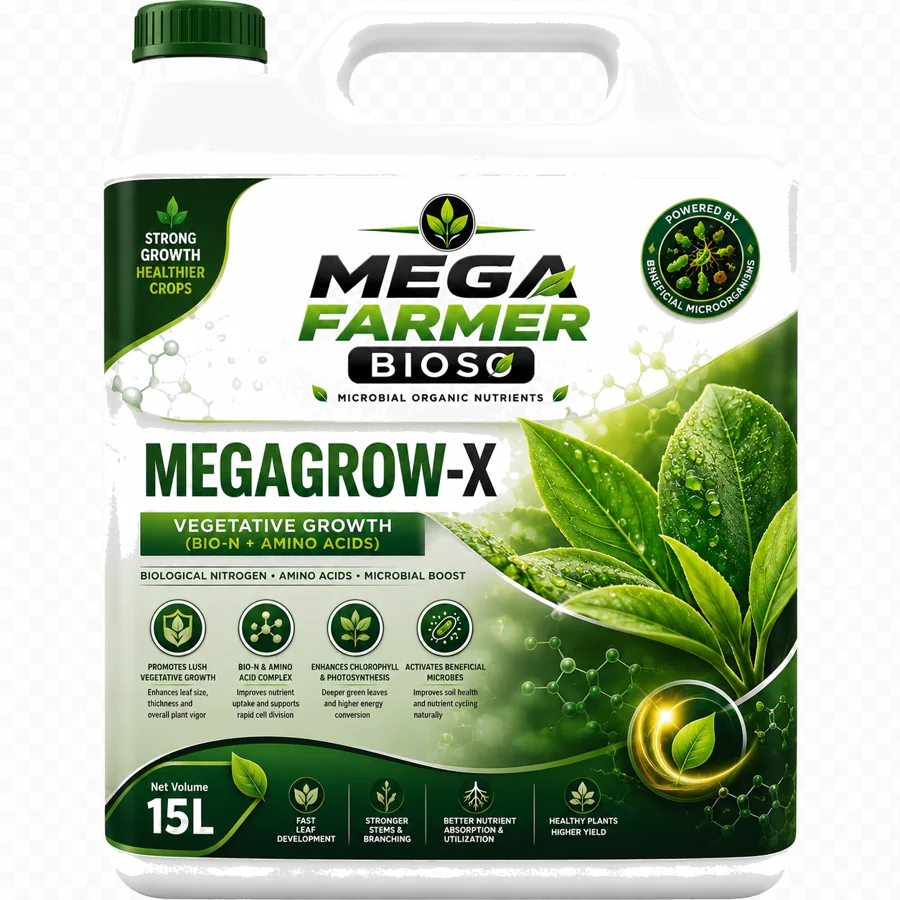
MegaGrow-X
Vegetative growth (bio-N + amino acids)
Azotobacter chroococcum · Azospirillum brasilense · Bacillus methylotrophicus · Bacillus velezensis · Bacillus pumilus
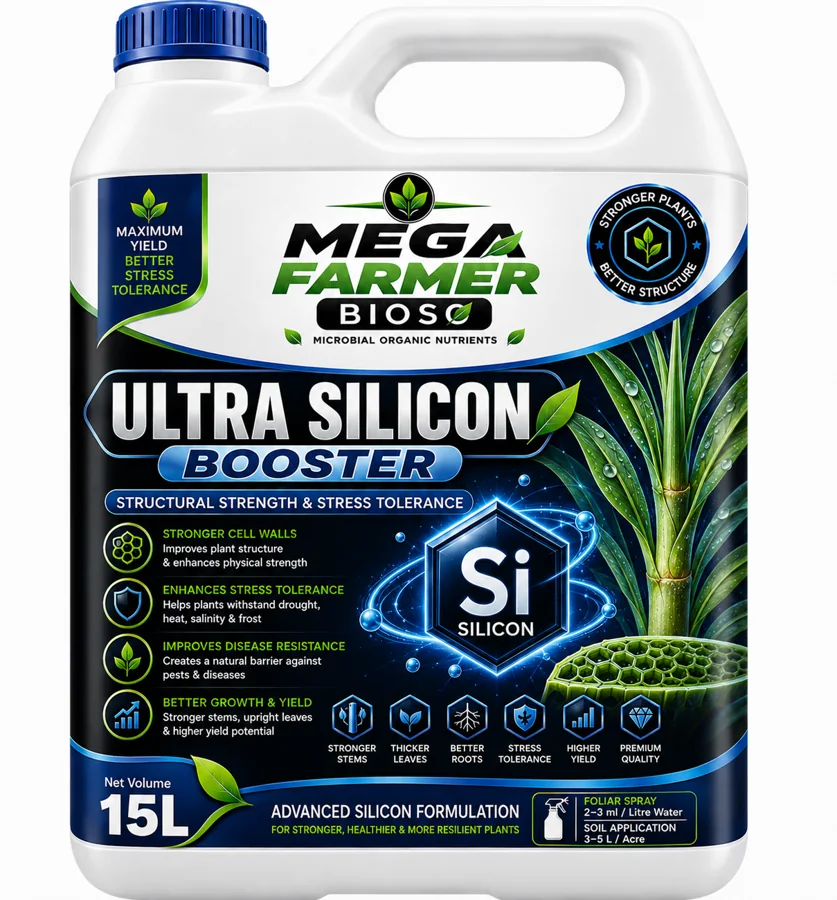
Ultra Silicon Booster
Structural strength & stress tolerance
Bacillus mucilaginosus
Results vary with soil, water, weather and management. Figures quoted from Mega Farmer field evaluations are single-season observations on named farms, not guarantees. Doses are label guidance — confirm with a soil test and your agronomist. Immuno-Shield is a root-colonising microbial soil conditioner used within IPM programmes; it is not a registered pesticide.